

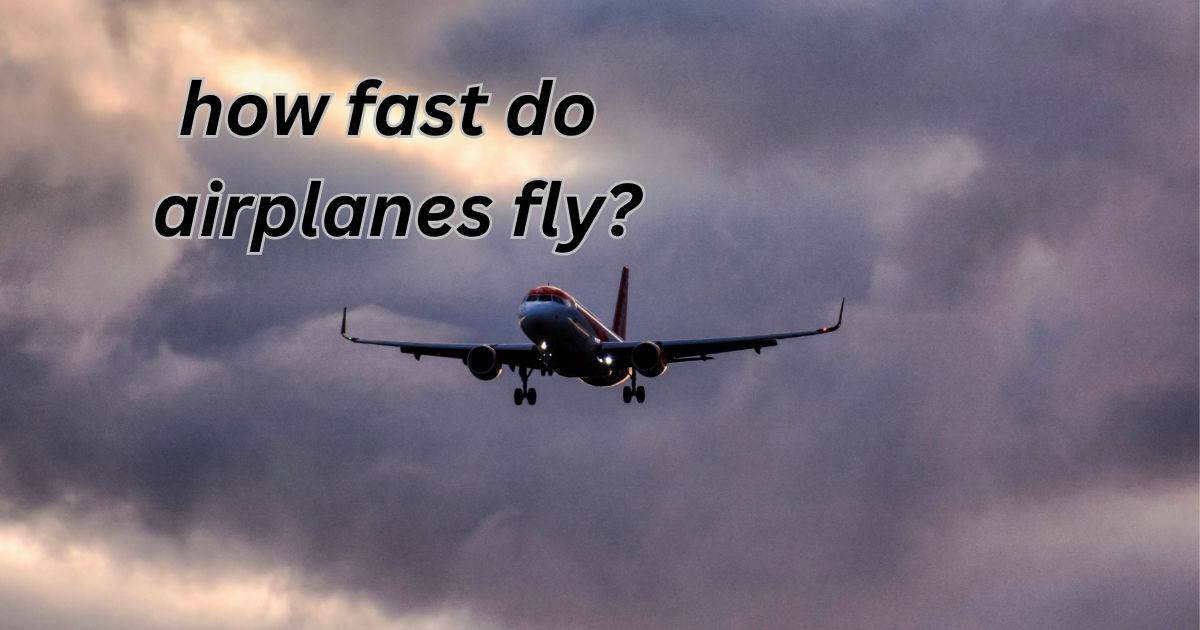
People often look out of an airplane window and wonder, how fast do airplanes fly? While flights feel smooth and calm, aircraft move at incredible speeds through the sky. From the moment a plane accelerates on the runway to the time it touches down, speed plays a critical role in safety and efficiency.
Airplanes do not travel at one constant speed. Instead, their speed changes during takeoff, climb, cruise, descent, and landing. Each phase requires precise control to keep passengers safe and comfortable.
This detailed guide explains how fast do airplanes fly during takeoff, cruise, and landing. It also explores the factors that affect aircraft speed, differences between airplane types, and why speed matters in modern aviation.
Understanding Airplane Speed Basics
Before answering how fast do airplanes fly, it helps to understand how speed is measured in aviation. Pilots rely on airspeed rather than ground speed.
Airspeed measures how fast the plane moves through the air. Ground speed measures how fast it moves over the Earth’s surface. Wind can increase or decrease ground speed without changing airspeed.
This distinction explains why flights sometimes arrive earlier or later than expected.
How Fast Do Airplanes Fly During Takeoff
Takeoff is one of the most exciting moments of flight. During this phase, airplanes accelerate rapidly along the runway.
Most commercial jets take off at speeds between 150 and 180 miles per hour. The exact speed depends on aircraft size, weight, runway length, and weather conditions.
Pilots calculate takeoff speed carefully to ensure the plane lifts safely into the air.
Aircraft Speed During Climb
After leaving the runway, airplanes enter the climb phase. Speed decreases slightly while the aircraft gains altitude.
During climb, planes typically fly between 250 and 300 miles per hour. This balance allows efficient ascent while maintaining engine performance.
Climb speed continues until the aircraft approaches cruising altitude.
How Fast Do Airplanes Fly at Cruising Altitude
Cruising altitude is where airplanes spend most of the flight. This phase answers the most common question: how fast do airplanes fly during normal flight?
Most commercial airplanes cruise between 480 and 575 miles per hour. At high altitudes, thinner air reduces drag and improves fuel efficiency.
Jet streams can increase ground speed, sometimes pushing aircraft beyond 600 miles per hour over the ground.
Why Cruise Speed Matters
Cruise speed affects fuel use, flight time, and passenger comfort. Flying too fast increases fuel consumption, while flying too slow delays arrival.
Airlines choose optimal cruise speeds to balance cost and efficiency. Modern aircraft designs focus on maintaining steady, efficient cruising performance.
This balance explains why planes do not always fly at maximum speed.
Airplane Speed During Descent
During descent, airplanes gradually reduce speed while lowering altitude. Controlled descent ensures passenger comfort and safety.
Most aircraft descend at speeds between 250 and 300 miles per hour. Pilots adjust speed based on air traffic control instructions and weather.
Smooth descent prevents sudden changes that could stress the aircraft.
How Fast Do Airplanes Fly When Landing
Landing requires precise speed control. Aircraft slow down significantly before touching the runway.
Most commercial planes land at speeds between 130 and 165 miles per hour. Flaps and spoilers help reduce speed while maintaining lift.
Careful landing speed allows safe braking and runway control.
Ground Speed vs Airspeed
Ground speed and airspeed often differ. Strong tailwinds can increase ground speed, while headwinds reduce it.
This difference explains why eastbound flights are often faster than westbound ones. Pilots constantly monitor both speeds during flight.
Understanding this concept clarifies how fast do airplanes fly in real-world conditions.
Factors That Affect How Fast Airplanes Fly
Many factors influence airplane speed:
- Aircraft design
- Weight and cargo load
- Altitude
- Weather and wind
- Air traffic control restrictions
Each factor plays a role in determining safe and efficient speed.
Speed Differences by Aircraft Type
Different airplanes fly at different speeds. Commercial jets, private jets, and military aircraft have unique performance profiles.
Commercial airliners focus on efficiency. Private jets often fly slightly faster. Military aircraft prioritize speed and maneuverability.
These differences explain why speed varies across aviation sectors.
Supersonic and Hypersonic Flight
Supersonic aircraft fly faster than the speed of sound, which is about 767 miles per hour at sea level.
The Concorde once carried passengers at over 1,300 miles per hour. Today, research continues into quieter and more efficient supersonic travel.
Hypersonic flight remains mostly experimental but promises future breakthroughs.
How Pilots Control Aircraft Speed
Pilots control speed using engine thrust, flaps, spoilers, and pitch angle. Modern cockpits rely heavily on automated systems.
Despite automation, pilots actively monitor speed to maintain safety. Training ensures quick response to changing conditions.
This teamwork between pilots and technology keeps flights reliable.
Conclusion
So, how fast do airplanes fly? The answer depends on the flight phase. Takeoff speeds range from 150–180 mph, cruising speeds average 480–575 mph, and landing speeds slow to 130–165 mph.
Aircraft speed balances safety, efficiency, and performance. Modern aviation relies on precise calculations and skilled pilots to manage speed at every stage.
Understanding airplane speed makes flying more fascinating and highlights the engineering behind every journey.
FAQ’s
How fast do airplanes fly at cruising altitude?
Most commercial airplanes cruise between 480 and 575 miles per hour.
Why do airplanes fly slower during takeoff and landing?
Lower speeds improve control and safety near the ground.
Do airplanes always fly at the same speed?
No, speed changes based on flight phase, weather, and air traffic.
Can airplanes fly faster than the speed of sound?
Some military and experimental aircraft can fly supersonic.
Does wind affect how fast airplanes fly?
Yes, wind changes ground speed but not airspeed.